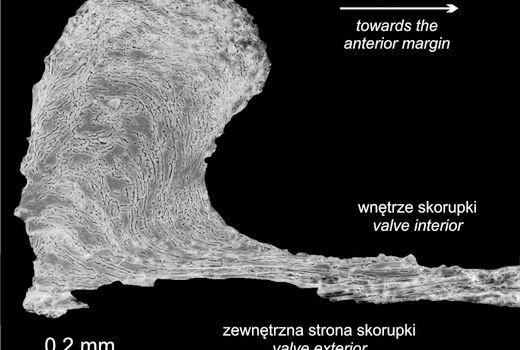
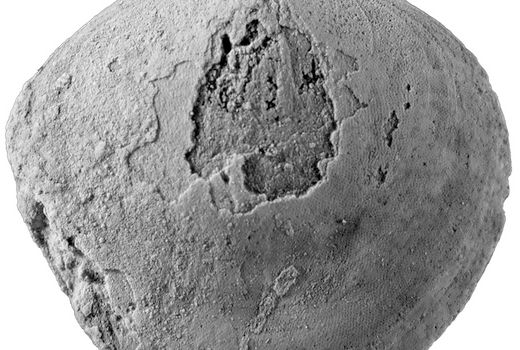
By using a non-invasive electron beam, SEM creates images of both high resolution and high magnification at the same time. These analyses provide detailed information about morphology, microstructure or elemental composition of samples.
For over 70 years, the Roman Kozłowski Institute of Paleobiology has been conducting in-depth studies of the history of life on Earth. Every year, the Institute publishes dozens of peer-reviewed articles, organizes conferences, foreign expeditions and excavations in new paleontological sites. We educate PhD students, publish the best paleontological journal in Poland (Acta Palaeontologica Polonica) and popularize science. The staff and laboratories are open to cooperation with other research centers and interdisciplinary projects. An essential part of our Institute is the Paleontological Collection, gathering the largest fossil collections in Poland (hundreds of thousands of specimens), partly exhibited in the Museum of Evolution.
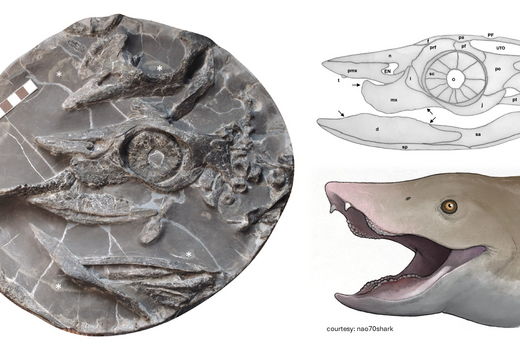
Lungfish were common in Late Triassic freshwater ecosystems but remain surprisingly understudied. New fossils from Frick (Switzerland), a locality that has also previously yielded remains of dinosaurs, allow for the first description of lungfish material from this site.
From 27 to 29 May 2026, the 90th Scientific Meeting of the Polish Geological Society was held in Lublin, co-organized by the Institute of Paleobiology of the Polish Academy of Sciences.
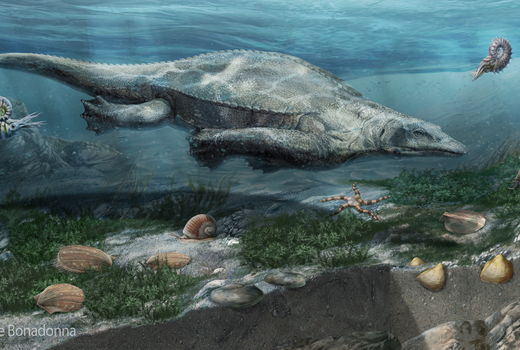
Turtles appeared in the Triassic and quickly attained global distribution. Yet, until recently, their early diversity was poorly recognized. The paper presents two new genera and species of Triassic turtles from Greenland established based on material collected in the late 20th century.
Principles of species identification in fossil material are a fundamental problem in palaeontology. This paper illustrates the issue through a taxonomic analysis of a collection of ammonites of the Pachydiscus neubergicus group from the Maastrichtianchalk of Denmark.
Despite their limited surface area, fjords play a disproportionately large role in the global organic carbon cycle. Those in the remote regions of the Southern Ocean are particularly poorly understood.
Colombellinidae was a family of small marine snails that inhabited warm shallow seas during the Jurassic and earliest Cretaceous. This extinct group was revised based on all known fossils. The family included only two genera. Additionally, a new species from Bulgaria was described.
Institute of Paleobiology has received financial support for research and educational projects from:
We use cookies to make it easier for users to navigate the website. Cookies also allow us to create anonymous website statistics. If you do not block cookies, you agree to their usage and saving to your device's memory. You can change your browser settings to disable cookies.
Korzystamy z plików cookies, by ułatwić użytkownikom poruszanie się po serwisie. Ciasteczka pozwalają nam także tworzyć anonimowe statystyki serwisu. Jeżeli nie blokujesz plików cookies, to zgadzasz się na ich używanie i zapisanie w pamięci twojego urządzenia. Możesz zmienić ustawienia przeglądarki, żeby wyłączyć zapisywanie ciasteczek.
Protects against cross-site request forgery attacks.
Retention period: This cookie will only remain for the current browser session.
Technical name: csrf_https-contao_csrf_token
Saves the current PHP session.
Retention period: This cookie will only remain for the current browser session.